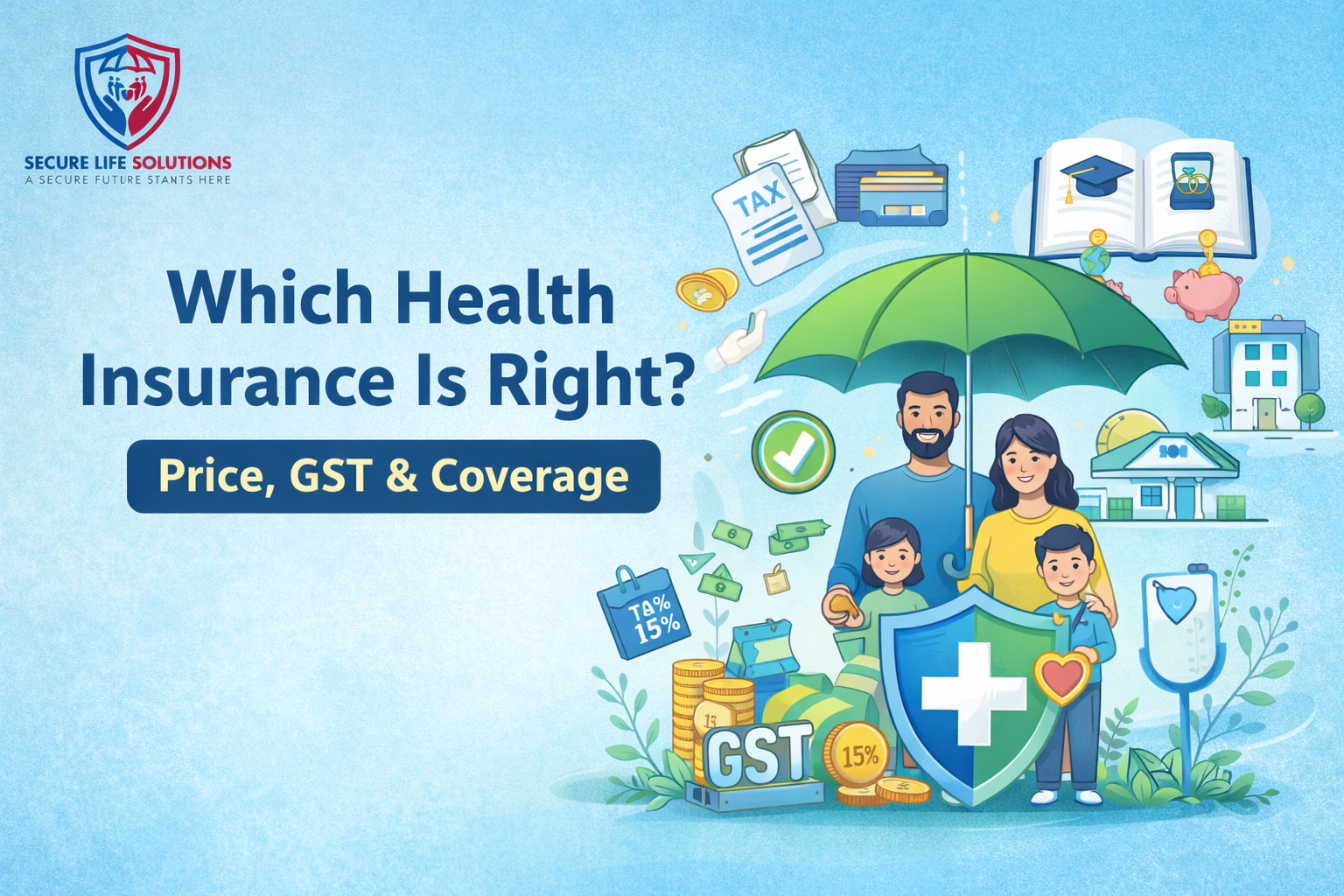
.png)
Buying life insurance is a responsible decision, but buying the right amount of life insurance is what truly protects your family. Many people either underestimate their coverage needs or rely on rough guesses, which can leave loved ones financially exposed when support is needed the most. This guide helps you understand how to calculate the right life insurance coverage based on real-life responsibilities, future plans, and financial goals without confusion or complicated formulas. Life insurance is meant to replace financial support when you are no longer around to provide it. However, many policies fail to serve their purpose because the coverage amount was not calculated properly. The right life insurance coverage ensures your family can manage daily expenses, clear debts, and continue with important life goals without compromising their financial stability. Life insurance is not just about paying a premium; it is about ensuring continuity. If the coverage is too low, your family may struggle to maintain their lifestyle. If it is unnecessarily high, it may strain your finances today. The correct coverage: Protects dependents from income loss Prevents debt burden on family members Supports long-term financial independence Provides peace of mind Several aspects of your life determine how much insurance you actually need: Monthly household expenses Number of people financially dependent on you Outstanding loans and liabilities Long-term commitments like education and marriage Expected working years left Evaluating these factors helps you arrive at a realistic coverage amount. Life insurance should replace the income your family would lose in your absence. Instead of complex calculations, ask yourself: “For how many years will my family depend on my income?” A practical approach is to consider coverage that can replace your income until major responsibilities are completed, such as children’s education or loan repayment. Loans can become a heavy burden for family members if not planned for. Your insurance coverage should factor in: Home loan balances Personal or vehicle loans Credit obligations Monthly living costs Including these ensures your family does not struggle financially during emotionally difficult times. If you have children, your insurance coverage must support their future aspirations. This may include: Professional or overseas studies Marriage-related expenses Life insurance ensures that these milestones are not compromised due to unforeseen events. If you have a solid retirement plan in place, your life insurance requirement may reduce after a certain age. However, if retirement savings are limited, insurance coverage becomes even more critical to support your family long-term Insurance and retirement planning should work together, not in isolation. NRIs often support families or financial commitments in India. In such cases, life insurance acts as a bridge between global income and local responsibilities. NRIs should consider: Income earned abroad Family expenses in India Currency differences Long-term dependents Many insurers allow NRIs to purchase life insurance online with minimal documentation compare insurance plans. Business owners carry both personal and professional responsibilities. Life insurance for business owners should cover: Business-related loans Financial protection for partners or employees Continuity of operations Adequate coverage ensures that personal and business obligations are managed smoothly. Some common mistakes include: Choosing coverage based only on premium affordability Ignoring future inflation Depending entirely on employer-provided insurance Not updating coverage after major life changes Delaying purchase until premiums increase Avoiding these mistakes leads to better financial security. Ideal Life Insurance Coverage Future income requirement Outstanding loans and liabilities Major financial goals Minus existing savings and investments This method provides a balanced estimate without complexity. Understanding how much life insurance coverage you need is essential for meaningful financial protection. The right coverage ensures your family’s future remains secure, goals stay intact, and responsibilities are met even in your absence. By evaluating income, liabilities, and long-term commitments carefully, you can choose a life insurance plan that truly supports those who matter most. No. Coverage should match actual financial needs, not assumptions. Yes, additional policies can be purchased as responsibilities increase. Usually not. Employer coverage is often limited and temporary. Yes. Buying early reduces premiums and increases long-term benefits. Yes. Term insurance offers substantial coverage at affordable premiums.Why the Right Life Insurance Coverage Matters
Key Factors That Influence Your Coverage Requirement
Understanding Income Replacement in Simple Terms
Accounting for Loans and Ongoing Expenses
Planning Coverage for Family and Children’s Future
How Retirement Planning Impacts Insurance Needs
Life Insurance Coverage Needs for NRIs
Coverage Considerations for Business Owners
Common Errors People Make While Estimating Coverage
An Easy Method to Calculate Your Ideal Coverage
Conclusion
Frequently Asked Questions (FAQs)
1. Is higher life insurance coverage always better?
2. Can I buy additional coverage later?
3. Is employer-provided life insurance sufficient?
4. Should young professionals buy life insurance early?
5. Is term insurance suitable for high coverage needs?








.jpg)





.jpg)








.png)


.png)
.png)









.png)
.png)
.png)