
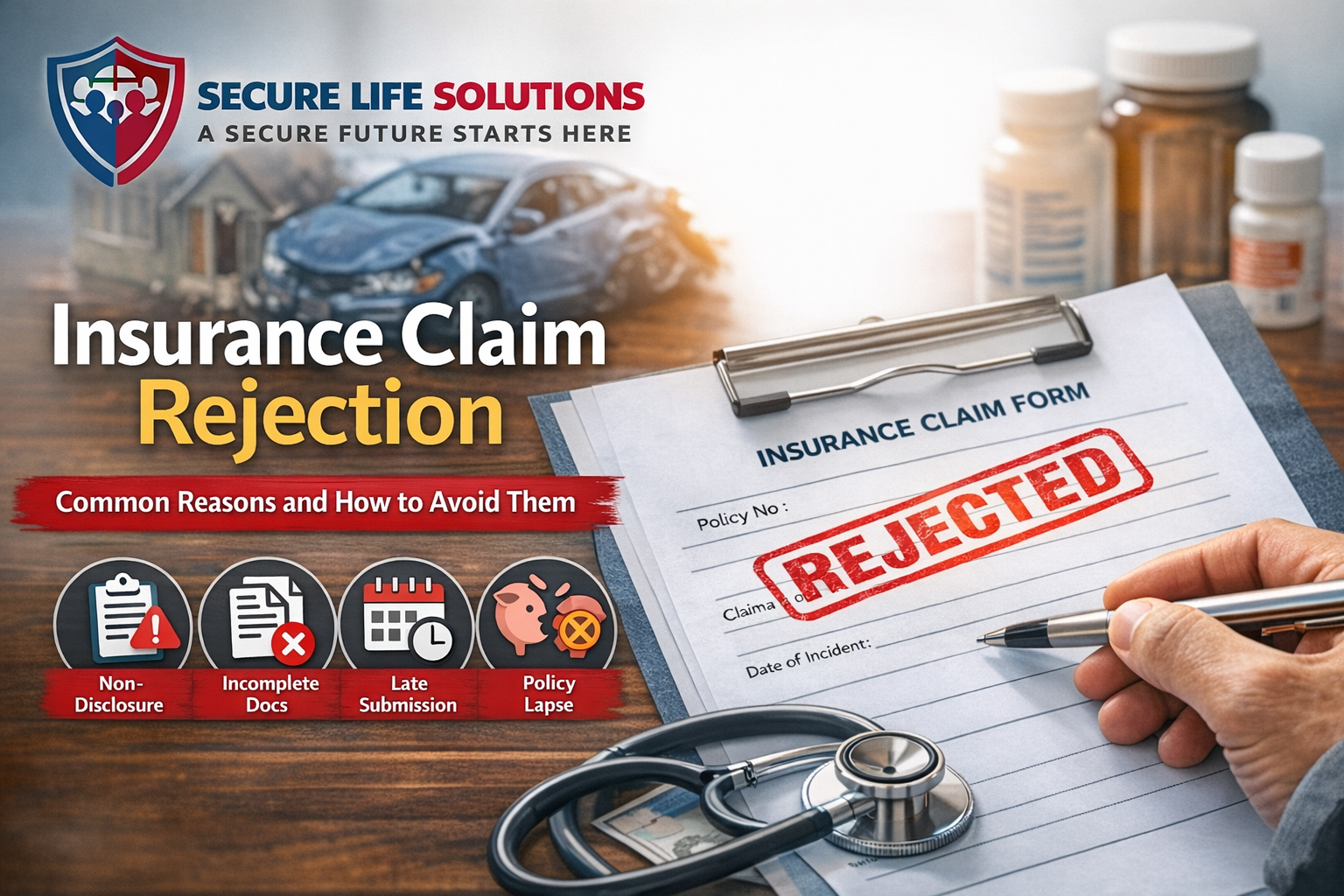
Insurance claim rejection is one of the most frustrating experiences for policyholders, especially during times of medical emergencies, financial loss, or the death of a loved one. While insurance is meant to act as a financial safety net, many people realize too late that buying a policy alone does not guarantee claim approval.
Understanding insurance claim rejection reasons and knowing how to avoid them can make a critical difference between financial relief and unexpected hardship.
Before exploring rejection reasons, it is important to understand how an insurance claim is processed. When a claim is filed, the insurer verifies whether the claim aligns with the policy’s terms, conditions, inclusions, exclusions, waiting periods, and documentation requirements. Any mismatch or violation can result in partial settlement or complete denial.
Familiarity with the insurance claim process helps policyholders avoid mistakes that commonly occur during claim filing.
Industry data on why insurance claims get rejected shows that most rejections are preventable with proper awareness and planning.
Non-disclosure remains one of the leading causes of life insurance claim rejection and health insurance denials. When purchasing a policy, insurers offer coverage based on the information provided by the applicant. Any missing or incorrect detail especially related to medical history, lifestyle habits, or occupation can invalidate the policy at the time of claim.
Hiding pre-existing illnesses such as diabetes or hypertension
Not disclosing smoking or alcohol consumption
Providing incorrect age or employment details
Failing to update medical conditions after policy issuance
Such omissions are often discovered during claim investigation. Insurers verify hospital records, medical prescriptions, and historical data before approving a claim.
To avoid this risk, always provide complete and accurate details when choosing life insurance coverage options.
Documentation errors are among the most common health insurance claim rejection reasons. Even genuine claims can be denied if supporting documents are missing, inconsistent, or incorrectly filled.
Hospital admission and discharge summaries
Doctor’s prescriptions and diagnostic reports
Original bills and payment receipts
Policy copy and identity proof
Failure to submit complete insurance claim documentation often leads to rejection or prolonged delays.
Studies on common causes of claim denial in health insurance emphasize that paperwork mistakes are one of the easiest yet most frequent errors made by policyholders.
Most insurance policies specify strict timelines for claim intimation and submission. Delays in informing the insurer about hospitalization, death, or loss can raise red flags and lead to denial.
For example, health insurance policies typically require intimation within 24–72 hours of hospitalization, while life insurance claims must be reported promptly after the insured event.
Understanding timelines outlined in the insurance claim process is essential to prevent rejection.
According to 10 reasons why health insurance claims get rejected, delayed claim submission continues to be a major reason for denial.
A policy must be active at the time of claim. Even a short lapse caused by missed premium payments can result in immediate claim rejection.
Many policyholders assume grace periods will always protect them, but claims made during a lapsed period are typically not payable.
Regularly monitoring premium due dates and reviewing insurance policy renewal status can prevent this issue.
Insurance policies include waiting periods during which specific illnesses or conditions are not covered. Claims filed during these periods are automatically rejected, regardless of documentation accuracy.
Understanding the waiting period in health insurance is especially important for newly purchased policies or newly added family members.
According to ways to avoid claim rejection, lack of awareness about waiting periods leads to unnecessary claim denials.
Every insurance policy has exclusions—specific treatments, conditions, or situations that are not covered. Claims related to excluded events are often denied, even if the policyholder is unaware of the exclusion.
Common exclusions include:
Cosmetic or elective procedures
Certain alternative treatments
Non-medical expenses
Injuries due to illegal activities
Carefully reviewing policy exclusions in insurance before filing a claim helps avoid disappointment.
Industry insights on why health insurance claims can be rejected highlight exclusions as a frequent cause of disputes.
Cashless claims are usually processed only at network hospitals approved by the insurer. Treatment at a non-network hospital may still be reimbursed, but it involves extensive verification and higher chances of rejection.
Understanding the network hospital claim process can significantly increase approval probability and reduce stress during emergencies.
Claims may be partially or fully rejected if expenses exceed the sum insured or violate sub-limits such as room rent caps, surgery limits, or treatment-specific ceilings.
Evaluating your health insurance coverage limits ensures realistic expectations during claims and helps avoid unexpected out-of-pocket expenses.
In life insurance, incorrect or outdated nominee information can delay or reject claims. This issue frequently arises in term life insurance claim rejection cases where documentation scrutiny is strict.
Regularly updating nominee details is essential, especially after major life events.
A widely reported case by Times of India involved a health insurance claim denied due to undisclosed medical history and contradictory digital evidence. The ruling reinforced the importance of transparency and accurate claim reporting.
To reduce the risk of claim denial, policyholders should:
Disclose all relevant information honestly
Maintain organized medical and policy records
Understand exclusions, waiting periods, and limits
Intimate claims within specified timelines
Use network hospitals whenever possible
Regularly review the insurance grievance redressal process
If a claim is rejected, escalation options include insurer grievance cells and the Insurance Ombudsman.
Insurance claim rejection is rarely accidental. Most denials occur due to lack of awareness, missed deadlines, or misunderstanding of policy terms.
By taking proactive steps such as reviewing policies regularly, maintaining accurate records, and following proper claim procedures policyholders can significantly improve their chances of successful claim settlement. Preparedness today can prevent financial stress when it matters most.
1. What is the most common reason for insurance claim rejection?
Non-disclosure of information and incomplete documentation are the most frequent reasons.
2. Can a rejected insurance claim be appealed?
Yes, claims can be appealed through the insurer’s grievance mechanism or escalated to the Insurance Ombudsman.
3. Does missing a premium payment affect claim approval?
Yes, a lapsed policy usually results in claim rejection.
4. Are claims from non-network hospitals always rejected?
No, but they require more documentation and undergo stricter scrutiny.
5. How can I improve my chances of claim approval?
Understand policy terms, submit accurate documents, follow timelines, and disclose all relevant information.








.jpg)





.jpg)







.png)




.png)
.png)









.png)
.png)
.png)
.png)