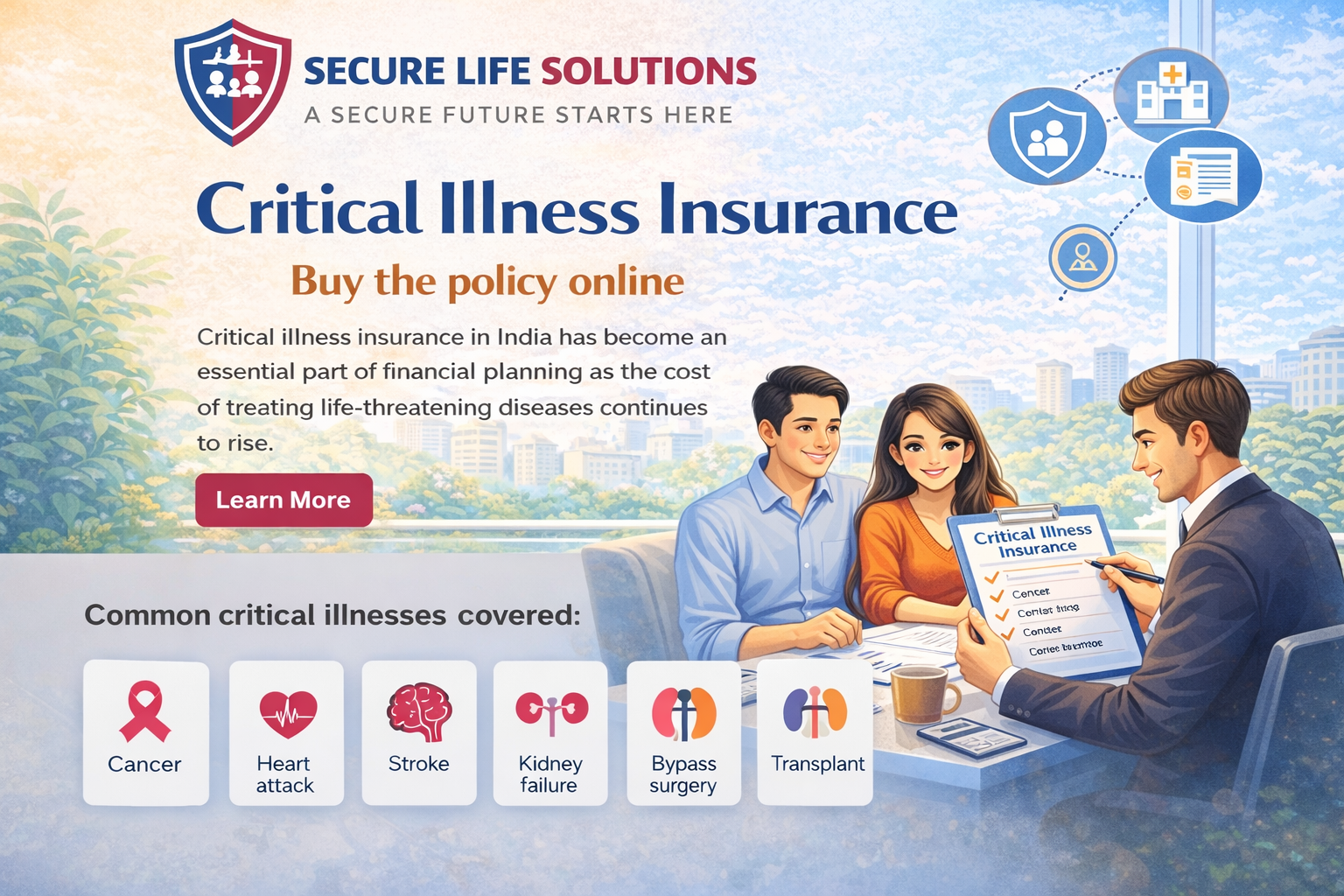
Critical illness insurance in India has become an essential part of financial planning as the cost of treating life-threatening diseases continues to rise. However, while treatment outcomes have improved, the financial burden of critical illnesses has increased dramatically.
Diseases such as cancer, heart attack, stroke, kidney failure, and organ transplants often require long-term treatment, lifestyle adjustments, and extended recovery periods.
Critical illness insurance is a specialized insurance policy that pays a fixed lump-sum amount when the policyholder is diagnosed with a specified critical illness listed in the policy document. Unlike traditional medical insurance, the payout is not linked to hospital bills or actual expenses.
Once the diagnosis is confirmed and claim conditions are met, the insured receives the benefit directly. This amount can be used at the policyholder’s discretion, making critical illness insurance highly flexible.
Many individuals explore different protection options through insurance services to understand how critical illness coverage complements health and life insurance.
Critical illnesses are no longer restricted to older age groups. Increasing stress, sedentary lifestyles, poor dietary habits, smoking, pollution, and genetic factors have led to a rise in serious illnesses among people in their 30s and 40s.
Health insurance covers hospitalization, not loss of income
Long-term treatment may exceed policy limits
Recovery may require months away from work
Lifestyle and rehabilitation expenses are often excluded
Educational insights shared through insurance planning blogs consistently highlight the importance of additional financial protection beyond hospitalization coverage.
Many people assume that health insurance alone is sufficient. However, health insurance and critical illness insurance serve different purposes and work best when used together.
Covers hospitalization and treatment costs
Pays bills directly to hospitals (cashless or reimbursement)
Limited to medical expenses
Pays a lump-sum amount after diagnosis
Covers medical and non-medical expenses
Helps manage income loss and lifestyle changes
Combining critical illness insurance with general insurance and life insurance creates a more balanced and resilient risk-management strategy.
Most critical illness policies cover a predefined list of serious medical conditions. While coverage varies by policy, commonly included illnesses are:
Cancer (major stages)
Heart attack
Stroke
Kidney failure
Coronary artery bypass surgery
Major organ transplant
Paralysis
Multiple sclerosis
It is crucial to carefully review the terms and conditions, as definitions, exclusions, and severity criteria may differ across policies.
Critical illness insurance is suitable for a wide range of individuals, including:
Salaried professionals dependent on monthly income
Self-employed individuals without income security
Individuals with a family history of critical illnesses
Primary earners with significant financial responsibilities
People with long-term loans or EMIs
Many individuals assess critical illness coverage alongside term life insurance plans to ensure complete income and family protection.
The process of critical illness insurance is straightforward:
The policyholder purchases coverage and pays regular premiums
A diagnosis of a covered critical illness is confirmed
Medical documents are submitted to the insurer
After verification, the insurer pays the lump-sum benefit
A waiting period (initial period after policy start)
A survival period (policyholder must survive a set number of days after diagnosis)
Once the claim is paid, the policy usually terminates.
In 2022, a 38-year-old marketing professional from Mumbai was diagnosed with early-stage cancer. His health insurance covered hospitalization, chemotherapy, and diagnostic tests. However, he had to take a six-month break from work, leading to complete income loss.
Monthly EMIs, household expenses, and travel costs for treatment created financial pressure. Fortunately, he had a critical illness insurance policy that paid a lump-sum amount upon diagnosis. This payout helped him manage living expenses and recovery costs without liquidating savings or borrowing money.
Such real-world examples frequently appear in insurance education blogs, highlighting the value of lump-sum protection.
The policy pays a fixed amount upon diagnosis, regardless of actual medical expenses.
It helps manage loss of income when the insured is unable to work.
The payout can be used for treatment, household expenses, rehabilitation, or debt repayment.
It fills financial gaps that medical insurance does not cover.
Policyholders can focus on recovery without financial stress.
Many people believe emergency savings are enough. However, prolonged illness can drain savings quickly. Critical illness insurance provides dedicated financial support, preserving long-term investments and retirement funds.
Savings are meant for planned goals, while insurance is designed for unpredictable high-impact risks.
List of covered illnesses
Definitions and severity clauses
Waiting and survival periods
Policy exclusions
Sum insured adequacy
Premium affordability
Understanding these factors ensures informed decision-making and reduces claim disputes later.
Premiums paid for critical illness insurance may be eligible for tax deductions under applicable income tax provisions, subject to policy structure and prevailing laws. Tax benefits improve the overall affordability of long-term protection planning.
When Is the Right Time to Buy Critical Illness Insurance?
The best time to buy critical illness insurance is early in life, when the individual is young and healthy. Early purchase offers:
Lower premium rates
Broader coverage
Fewer medical exclusions
Higher acceptance probability
Delaying purchase increases the risk of exclusions or policy rejection due to medical history.
Common Myths About Critical Illness Insurance
Health insurance does not replace income or cover non-medical expenses.
Lifestyle diseases now affect people in their 30s and 40s.
Claims are straightforward if policy conditions are understood and documents are accurate.
Clearing these misconceptions helps individuals make informed protection choices.
Critical illness insurance works best when combined with:
Health insurance for medical expenses
Life insurance for family income protection
General insurance for asset protection
A diversified insurance portfolio ensures financial stability across different life risks.
Critical illness insurance in India is no longer a luxury; it is a necessary layer of financial protection in today’s high-cost healthcare environment. While health insurance manages hospital bills, critical illness insurance safeguards income, savings, and lifestyle during prolonged treatment and recovery.
By planning early, choosing adequate coverage, and understanding policy terms, individuals can protect their financial future against life’s most unpredictable health challenges.
Critical illness insurance is a policy that provides a lump-sum payout when the insured is diagnosed with a serious illness listed in the policy, such as cancer, heart attack, or stroke.
Health insurance covers hospitalization and treatment costs, while critical illness insurance pays a fixed lump sum after diagnosis.
Most policies cover illnesses such as cancer, heart attack, stroke, kidney failure, major organ transplant, paralysis, and coronary artery bypass surgery.
Critical illness insurance is ideal for salaried professionals, self-employed individuals, primary earners, and people with a family history of serious illnesses.
The best time to buy critical illness insurance is at a younger age when you are health







.jpg)





.jpg)






.png)
.png)
.png)








.png)
.png)
.png)
.png)